Diagnosed with Autism Spectrum Disorder at the age of eight, Dr Camilla Pang struggled to understand the world around her. Through a set of scientific principles, this book examines life’s everyday interactions including- Decisions and the route we take to make them; Conflict and how we can avoid it; Relationships and how we establish them; Etiquette and how we conform to it.
A practice for empathic and
experimental architecture
Introduction
arrowleft
arrowright
1.Introduction
2.Photography
3.Photography
4.Construction
5.Essay
On Autism, Architecture & Anthropology
Carmen Cummings. Anthropologist
6.Model
7.Plan
8.Library

9.Model
10.Image
11.Library

12.References
Heidi II: McGlashan Everist
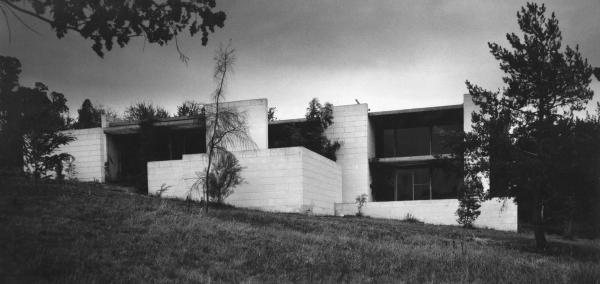
David McGlashan and Neil Everist were commissioned by John and Sunday Reed to design a new house and gallery. Built in 1967, the project has become an icon of Australian architecture. The project is unique for its use of L shaped blade walls to control the spatial sequence and delineate space.
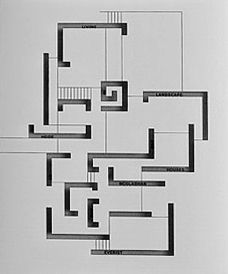
Heide II alternates masses and voids, loosening and tightening their connection by turns. These seem compressed at points, but as you move around them they open up into spreading episodes, the windows wide enough and recessed enough to read as major intervals in the fabric, before a tall pier gathers the lines and weight up again – the house literally moving on to another ‘moment’.
Project Details
- Commenced: 2016. Landscaping by Bush Projects
- Builder: Cale Peters
- Photography: Trevor Mein
Awards
- 2020 Victorian Architecture Awards - Shortlist
- 2019 Master Builders Association - Best Sustainable Home
How does architecture provide the need for someone to experience daily life through physical sensation? Sensory-Seeking, a form of Autism Spectrum Disorder (ASD) whereby physical feelings are constantly being sought in-order to stimulate a starved nervous system became a key component of this projects brief.
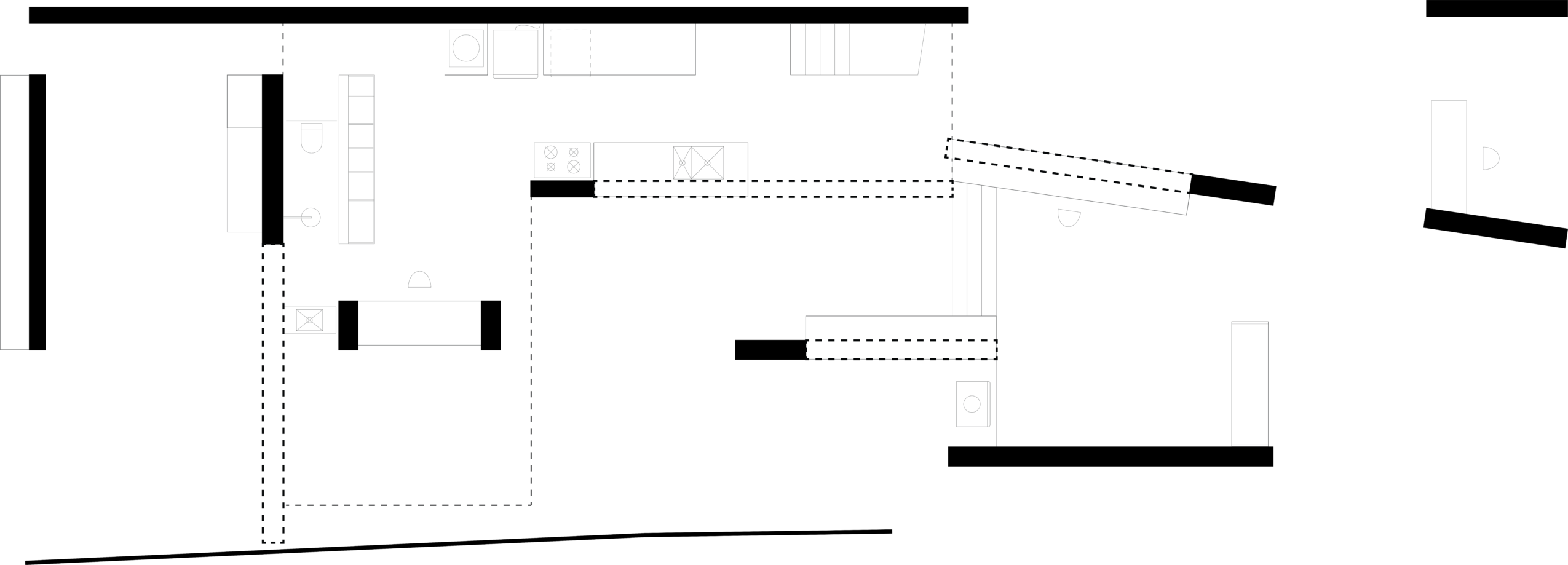
Rigorous spatial planning and sequence of movement mapping was imperative to the success of this project. Material properties and a sense of hierarchy was intrinsic.
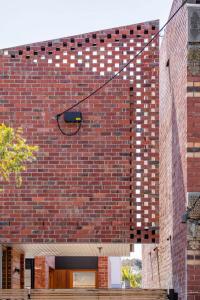
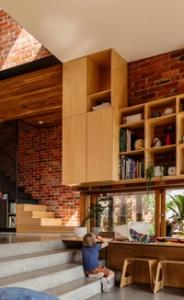
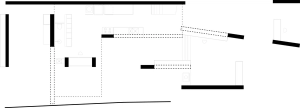
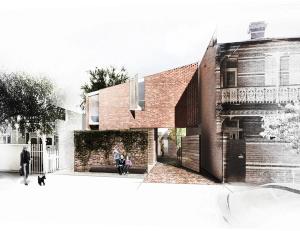
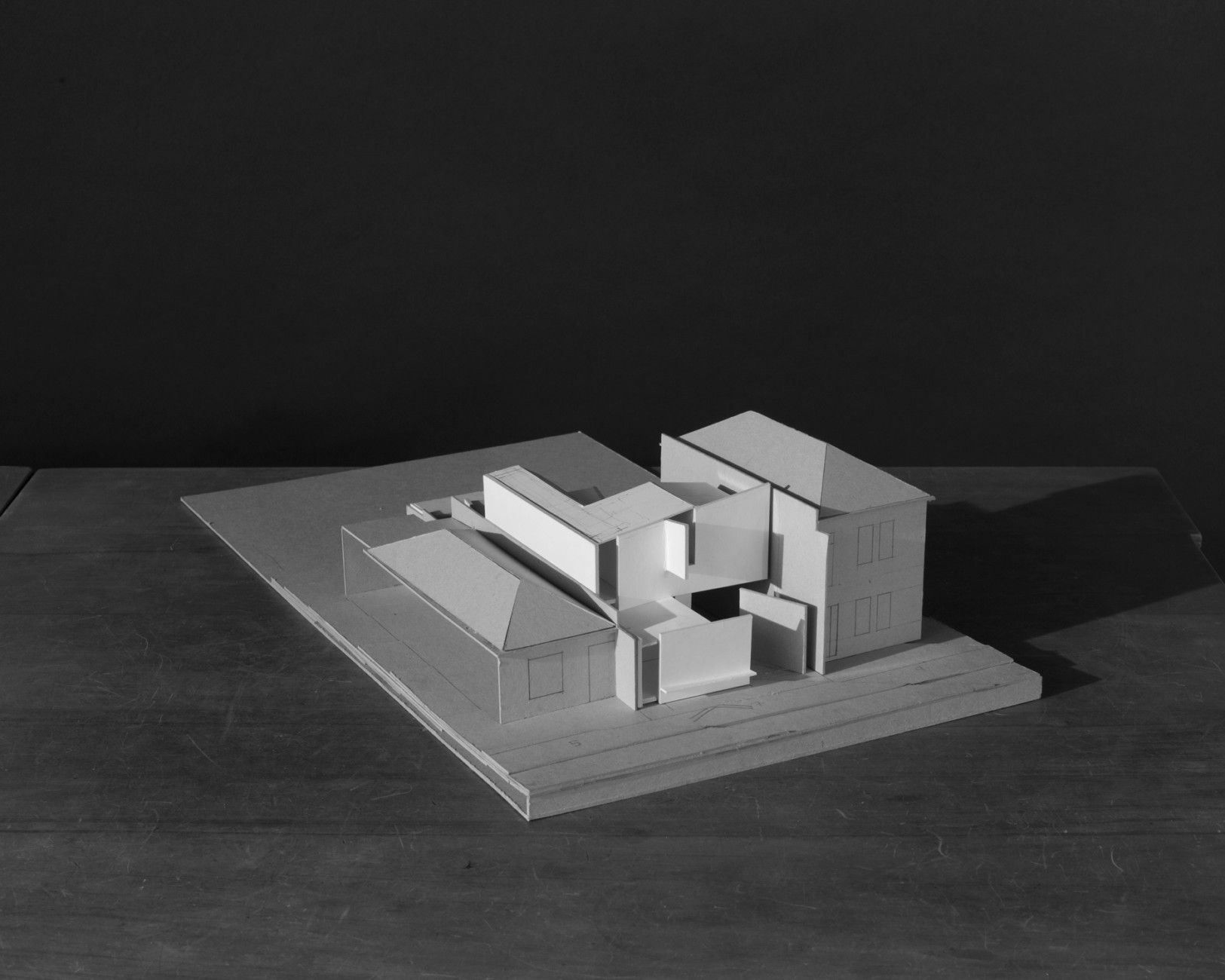
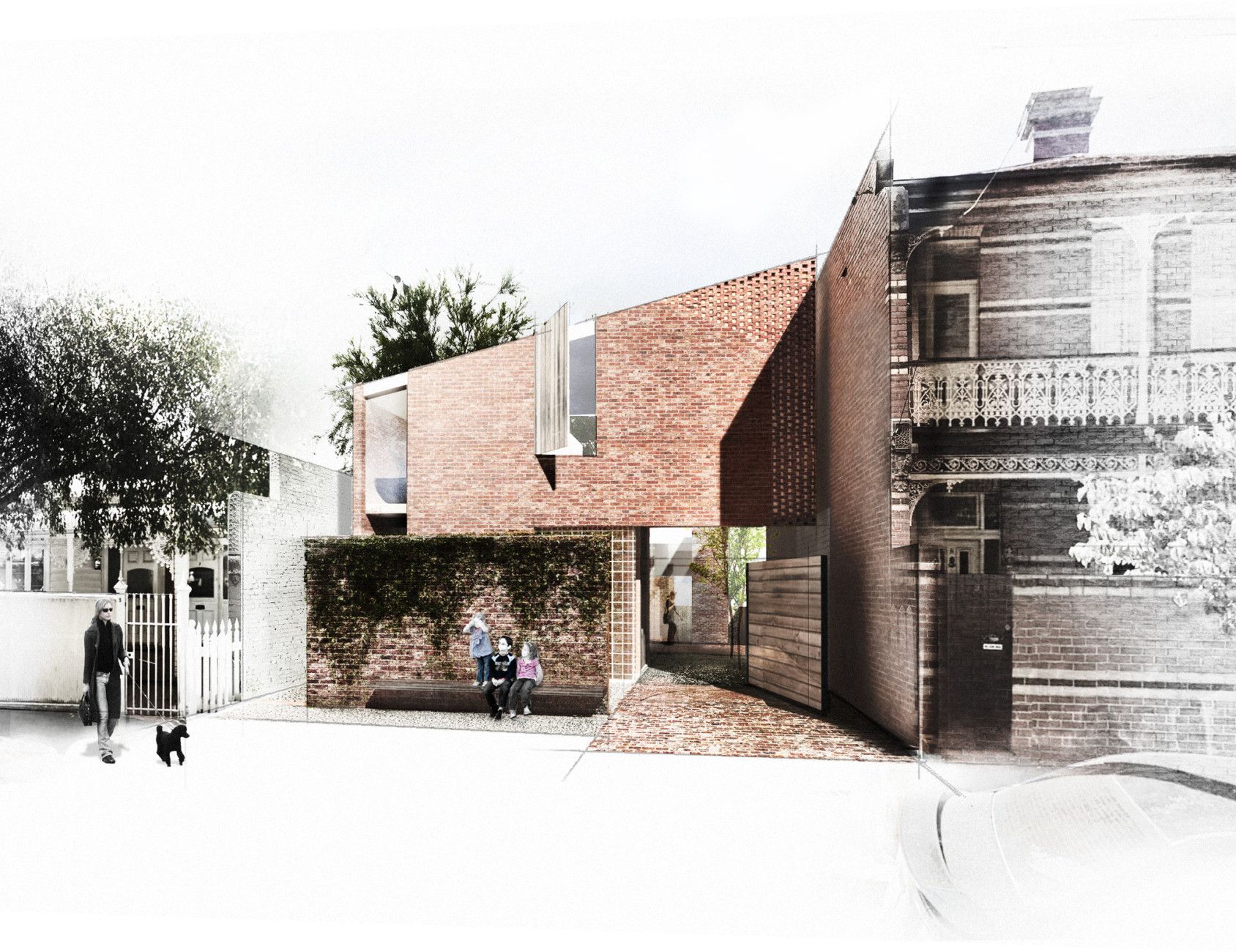
Consisting of eleven solid brick blades, this project guides it’s occupants through a careful sequence of spaces both internally and externally. Each brick blade is orientated to take full advantage of its context, and the environmental parameters which were presented. Each brick blade is detailed and expressed to be touched, climbed and remembered over time. Where you walk, where you pause, where you sit, stand and work – all considered critical operations in the realisations of how this project is read and more importantly, physically understood.
Keywords
Autism Spectrum Disorder, Brick, Memory, Robust, Sensorial, Spatial Sequence, Stimulation, Touch
Photography
2.arrowleft
arrowright
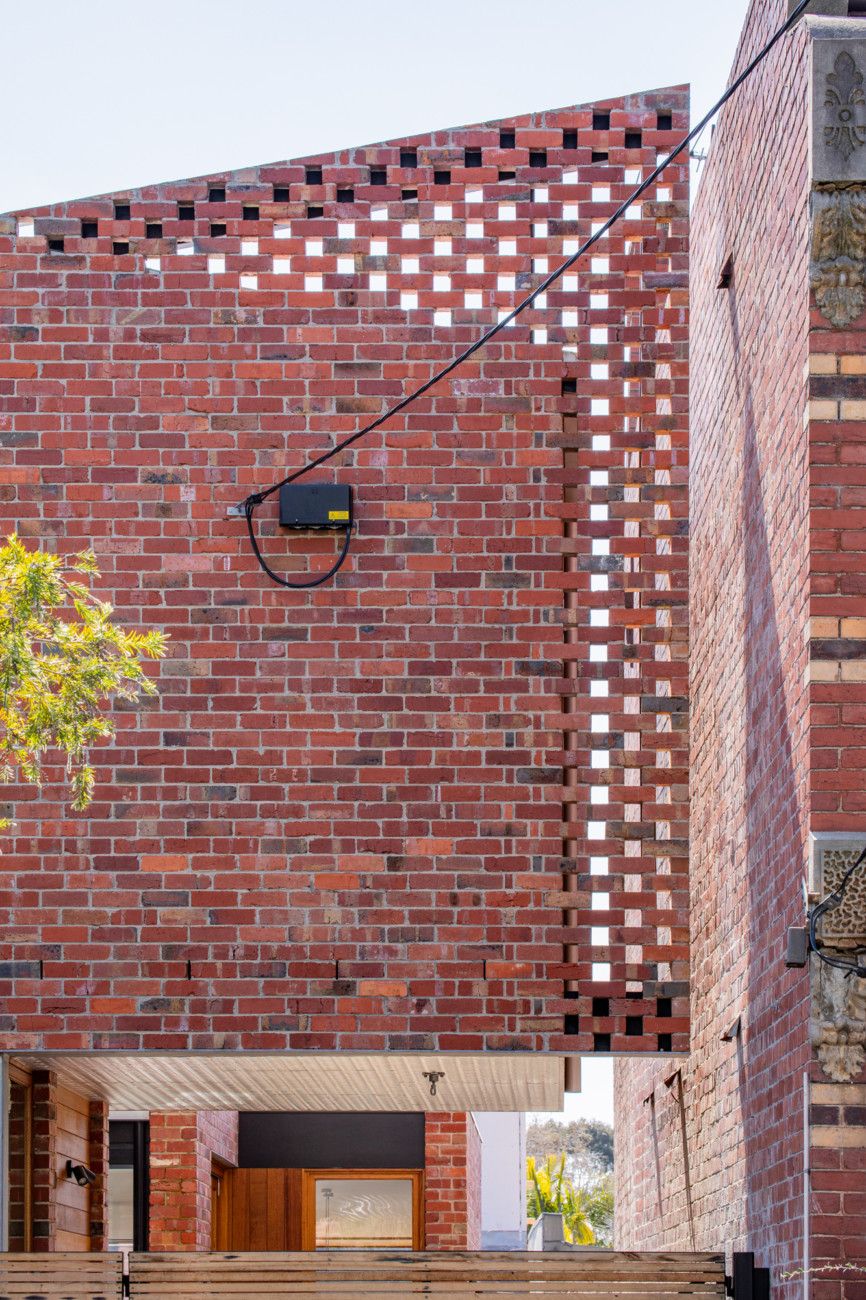
(1 of 13)
Photography
3.arrowleft
arrowright
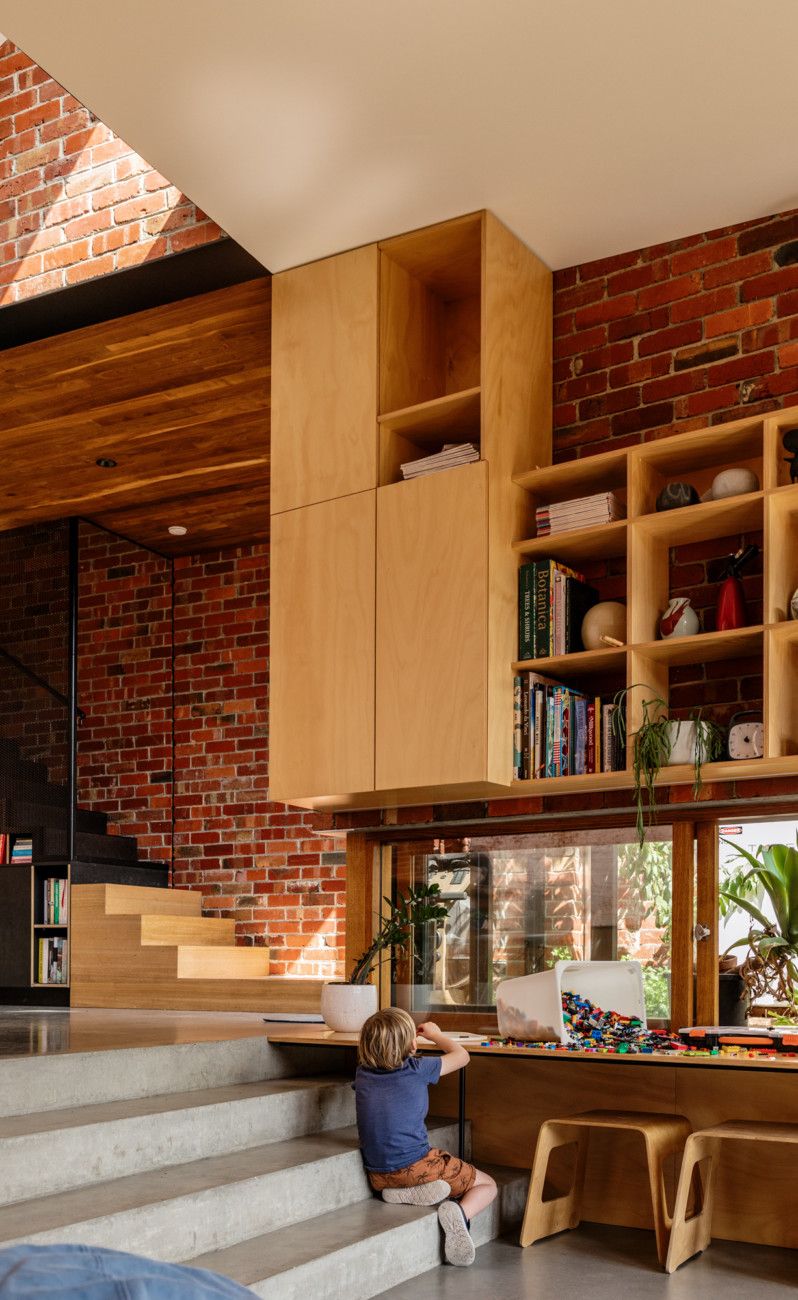
(1 of 18)
Construction
4.arrowleft
arrowright
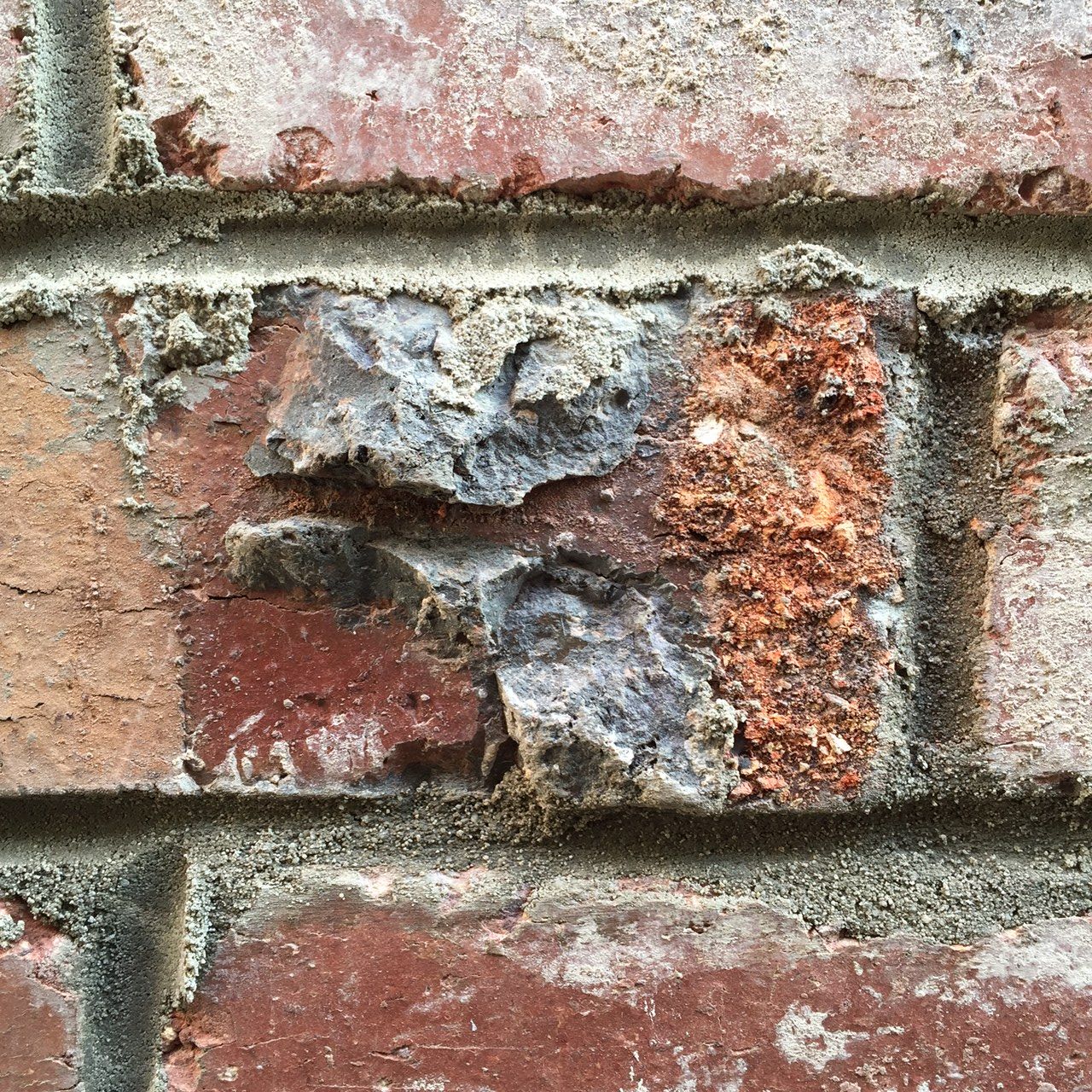
(1 of 5)
On Autism, Architecture & Anthropologyby Carmen Cummings. Anthropologist
5.1.
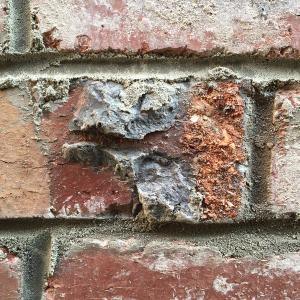
Tonight, in a vain attempt to convince my baby that it was dark and all the world was asleep, I sat on the porch just out of the rain and looked out at the night. Showing no inclinations towards tiredness, she faced the wall of the house and proceeded to claw her fingers into the grooves between the bricks. Small pieces of mortar were broken off and let fall. Then the cardamom-ginger plant beside the chair was tugged at, emanating a sweet and spicy aroma, and shreds were ingested. At this point a car passed, and the baby spun her head at the sound and watched the lights recede beyond view.
Read More
close
On Autism, Architecture & Anthropology
by Carmen Cummings. Anthropologist
1.
Tonight, in a vain attempt to convince my baby that it was dark and all the world was asleep, I sat on the porch just out of the rain and looked out at the night. Showing no inclinations towards tiredness, she faced the wall of the house and proceeded to claw her fingers into the grooves between the bricks. Small pieces of mortar were broken off and let fall. Then the cardamom-ginger plant beside the chair was tugged at, emanating a sweet and spicy aroma, and shreds were ingested. At this point a car passed, and the baby spun her head at the sound and watched the lights recede beyond view.
I had often sat in that chair, yet I had never felt the bricks that make up our home with my fingertips. Neither had I ever pulled at the shiny strip that separates the babe’s carpeted bedroom from the floorboards of the hall. And it wasn’t until we shifted her to her own room recently, and I lay beside her on her low bed looking up at the distant ceiling and the small dangling light, that I empathised the high-ceilinged room may seem vast and intimidating. We both live here, but we take in different parts of the building. What does it mean to take this seriously?
I’ve been asked to write about autism and architecture. I’m an anthropologist and the daughter of owner-builders. I grew up on a construction site and, professionally, I have thought a great deal about the relationships between people and places. I can talk about design considerations with ease, but, although – or perhaps because – I’m a mother now, and my own mother works with children with diagnoses of autism, it is difficult to speak about autism. Autistic anthropologist Dawn Prince identifies that autism inspires fear because it ‘threatens order in both the academic sense and in the personal’.1 Indeed, finding a place to begin is like reaching out to touch bricks and mortar and feeling only the gaps.
2.
Let’s start then with building foundations, a language. What is autism?
The term was first used in 1911, by a Swiss psychiatrist in relation to schizophrenia.2 Since becoming the label for a ‘distinct childhood psychiatric syndrome’ in 1943,3 the concept of autism has been formally recognised as a medical condition, albeit one whose diagnostic criteria has changed radically over time, up to and including a changed definition of Autism Spectrum Disorder (ASD) in the fifth edition of the Diagnostic and Statistical Manual of Mental Disorders.4 It appears that ‘what we know and understand about autism is constantly in flux’, although the anthropologist Roy Grinker notes that ‘the constellation of behaviors and cognitive characteristics that we call ‘‘autism’’ today existed long before we made it an object of knowledge and narrative—before we interpreted it, named it, and started the ongoing process of reinterpretation and redefinition.’5
These two points highlight that, in speaking about autism, one is dealing both with a phenomenon and a cultural construct: it can be described narrowly, and generally negatively,6 as a ‘biomedical, neurological, or developmental or educational disorder’, and, more positively, ‘experientially as a way of being in the world’.7 The tension between, and within, these views generates both dilemmas and possibilities.
Though once a ‘rare psychogenic condition’, anthropologists Olga Solomon and Nancy Bagatell now speak of the ‘expanding boundaries of autism and its increasing prevalence’:8 in the US in 2009, diagnostic rates were at 1 in 110 children, and 1 in 70 boys.9 Three years later the same figure read 1 in 88 children and 1 in 54 boys.10 Although a scientific ‘deficit’ model of autism, based on concepts of normality and difference, separates humans into the autistic and the neurotypical,11 disability advocates who champion the positive aspects of a neurodiverse population emphasise ‘how big and diverse the disability is’;12 indeed, Solomon states that heterogeneity is the hallmark characteristic of autism.13 As Grinker explains,
Medicalized approaches to autism, at least as autism is now conceptualized as an expansive spectrum, also risk making a disease out of traits that are likely distributed in varying degrees among the general population, obscuring the positive characteristics of autism that contribute to human diversity and creativity.14
If the distinctiveness of autistic traits is culturally constituted, or even, in Prince’s view,15 an illusion, then society has the potential to un-disable those so labelled through better accommodating those traits.16
Yet, the increasing breadth of the autism ‘spectrum’, as a category suggesting inclusiveness, risks masking ‘the gritty truth about autism’:17 diluting the difficulty faced by some people with diagnoses and their families, and downplaying the urgency of their need for effective interventions and supports. In a survey of the UK autism community on the language surrounding ASD, Kenny et al. sought the views of those with autism, their family members and professionals in the field. As one autistic adult in their study explained, ‘well-meaning but unhelpful comments along the lines of “it’s a spectrum so we’re all on there somewhere” – trivialis[e] the very real problems it causes for those who are genuinely autistic’.18 Of such self-advocates, Grinker reflects that they are ‘often far more verbal, socially capable, independent, and empowered than others: autistic people who are non-verbal, self-injurious, have seizure and other comorbid disorders, and may require lifelong institutional care’.19 He concludes:
It is clear that even the concept of an autism spectrum cannot easily account for the wide range of suffering that exists. Nor can suffering be accounted for in a relativist frame only as the product of a society’s norms, or intolerance of neurodiversity.20
How then should we speak, usefully, truthfully and respectfully, about autism? Considering there are ‘reasonable and rational disagreements between members of the autism community as to which terms should be used’,21 one study recommended that those who work within the area ‘ensure that they have a clear understanding of the needs and preferences of individuals themselves and … learn how to listen effectively to autistic people and their families’.22 But should we use the term at all? Such words may in fact get in the way of seeing a person clearly, as another autistic participant in Kenny et al.’s study suggests: ‘functioning labels should be abandoned in favour of concrete descriptions of an individual’s specific access needs for particular accommodations’.23
3.
If dwellings embody our values24 then architecture, as cultural construction,25 has power to better accommodate a greater diversity of individual’s specific needs by dismantling and rebuilding ideas of normativity. The reality of difficulty experienced by some people with autism and their families, too, is something which can be compounded or alleviated by the built environment, and is an opportunity for design innovations.
The question of what these should be, in any given scenario, is not one with a simple or single answer. When it comes to building, architects find that ‘autism turns conventional knowledge on its head’,26 supposedly ‘a result of the non-standardized nature of challenges and, respectively, needs along the autistic spectrum.’27 Existing design guidelines can assist architects in knowing the kinds of questions to ask from the first meeting, and can give clients ideas as to what may be appropriate to their situation; however, these are only useful to the extent that they reflect the particular experiences of the building’s intended inhabitants.28 Further, members of families including a child with autism have different spatial needs. While ‘the entire family system could be positively affected if only one person in the family system becomes more comfortable’,29 if design intended to assist one member adversely impacts on others, the reverse could also be true.
Problematically, despite the existence of design recommendations, to date ‘there is a dearth of research related to space design for people with autism’.30 An analysis of written accounts by people with autism identifies four main experiential themes relevant to architecture: ‘a deeply sensory world’, ‘a mentally challenging world’, ‘independence and self-esteem’, and ‘safety and well-being’.31 Of these, the biggest focus of research to date has to do with building for the senses.
As illustrated by our porch foray, my daughter and I have, as do all humans, different ‘sensory profiles’:32 we lean towards some sensations of touch, smell, sound, vision, taste, movement and gravity, and away from others. But for us, so far, these innate preferences are manageable and catered to, whereas autistic people – as well as those affected by other conditions – have an altered sensitivity.33 This can manifest, not just as hyper-sensitivity, which may result in avoidance, and hypo-sensitivity, leading to sensory seeking, but also as internal interference: mixed signals.34 In addition, ‘an autistic child may also be unresponsive to sensations that their parents find unpleasant, such as extreme heat, cold, and pain.’35 Not only will every individual with autism have a different sensory profile, but their sensory experiences can change within a day, as well as in nature, frequency and severity over their life.36
When surroundings continually present a ‘lack or overload of sensory stimuli’,37 it can be difficult for a person with autism to simply ‘feel at ease in their own environment.’38 A sense of too much input can result in negative reactions to everyday household sounds, such as the sound of water running in the sink, and sights, such as a sunlit window.39 A sense of insufficient stimulation can manifest in a range of gross motor movements, such as rough interactions with objects in the environment, and intense inspection, through touching and/or looking at certain aspects of a space, such as surfaces and carpets.40
Putting sensory experience in the centre of an understanding of autism suggests that the key to designing for autism is better aligning the sensory environment with that experience.41 Architect and researcher Magda Mostafa contends that the disregulated behaviour common to autism can be favourably influenced by altering a person’s surrounds before, rather than after, such behaviour occurs.42 She explains:
If you think of the primary problem of autism being understanding, coping with and responding to the sensory environment, you can grasp the power of architecture in their everyday lives. The built environment provides the large majority of sensory input- light, acoustics, textures, colors, spatial configurations, ventilation etc. By manipulating the design of the environment we can manipulate that all-so-important sensory input.43
By freeing an autistic child’s sensory network of unnecessary traffic from their surrounds, Mostafa believes, a precious ‘window of opportunity’ is created for communication and the acquisition of skills.44 In order to determine how best to achieve this, she developed a design matrix which will generate different guidelines in response to the sensory profiles of intended users.45 The model is based on her finding that a person with autism identifies with the architectural environment not according to functional zoning, but rather, to sensory zoning.46 This means that, as opposed to spaces being organised according to activity (noisy cooking in a kitchen next to a quiet lounge, for example), they are grouped and ordered in relation to their level of sensory input (with quiet and calm spaces separated from others by transition zones). While design for autism is extremely challenged by building for a diversity of users, as in school design, Mostafa’s tool could usefully customise buildings with less users, such as private homes.47
When taking account of sensory experience in design for autism, though, it is important to consider not just what a space does to a person, but what a person can do in the space. For example, a large cylinder can invite circling around, crawling through, looking through, calling through, balancing on top or sliding off, activities providing a high level of sensory input, particularly proprioceptive and vestibular. Were the cylinder shiny or patterned outside, and lined with shag pile within, then visual and tactile aspects potential would also be increased. These possibilities may regulate a person with some hyposensitivities. Likewise, enclosing one end to create a cave or nest space may offer opportunity for sensory withdrawal, a place of respite for those with hypersensitivities. This is the concept of ‘affordances’: the possibilities for movement and interaction opened up by a building, or what spaces offer.48 If ‘structure determines what affordances exist’, it is the ‘affordances that indicate what behaviours are possible’,49 giving the designers of our built environments both power and responsibility.50 Paramita Atmodiwirjo explains that, ‘Within the context of the physical environment for autistic children, the presence of the environment needs to be considered as an affordance for actions and activities that could support the child’s sensory integration development’.51
4.
There remains a gap between these architectural insights into autism and the application and testing of them through design for specific autistic individuals, and, in the case of domestic spaces, their families. Those calling for more evidenced-based architecture when it comes to autism acknowledge that it is difficult to achieve, a result of the difficulty of controlling for variables, not to mention the added costs of experimental builds.52 Yet, as one expressed, since when it comes to autism ‘environmental factors lead to vastly different outcomes not knowing the effects of designed environments is not an option’.53 There is a clear need for more, and better, architectural research into which environments are most supportive for people with autism.54
This need coincides with the ‘reorientation’55 of architecture away from object, or product, and towards process.56 As opposed to being a ‘tool of exclusion’, architecture that focuses on process is about active engagement: ‘taking a lead yet at the same time relinquishing control … having an imaginative vision, but executing it in the name of others’.57 This kind of architecture requires closer attention to those who dwell58 inside buildings, as well as deeper consultation.59
Such a shift in emphasis necessitates new skills and collaborations – even more so in design for autism, where unique sensory needs, preferences, and family configurations must drive the process. This is where, I suggest, anthropology is relevant, as a profession that seeks to understand the experience of others from the inside.60 Methodologically, architecture and anthropology have different temporal orientations:
[A]rchitectural research is inclined to proceed by first intervening, and then observing what comes out of such intervention. Anthropologists, on the other hand, describe the world as it is first before attempting any kind of projection.61
Motivationally, however, there is growing acknowledgement amongst practitioners of the ways in which the two disciplines align. For example, anthropologist Marie Stender observes that:
The anthropological ambition of probing behind what people say in order to know more about what they do and why is related to the architects’ ambition of providing the building owner with what he needs and not what he says he needs.62
Anthropologists can be of use to architects in general, to help them gain knowledge of who they are actually building for.63 For families including those with autism, ethnographic methods of data collection, and anthropological analysis, can help reveal the ways in which they use, and could be better served by, the buildings they live in: taking account of the sensory environment, affordances, and the interplay of the spaces occupied by each member, and translating this information, between architect, client and vice-versa, in ways that can inform responsive design.
If, as Grinker suggests, the ‘explanatory models people develop for autism are engines for social action’,64 then our ability to build for autism is only as good as our understanding of it, not in general or in theory, but as it manifests for each individual, within their specific context. Which takes me back to the porch and the night.
Were my daughter to be diagnosed with autism tomorrow, or in years to come, I would want a house that she felt at home in. I would want someone to understand both her ‘way of being’ in the world, and the particular challenges we, together, consequently faced. I would want someone to think hard about the grooves between bricks.
About the Author: Carmen Cummings is an anthropologist with interests in psychological anthropology and the relationships between people, places and spaces. She has spent the last decade conducting native title research for Aboriginal groups in Western Australia. She holds a Bachelor of Arts (first class honours) degree in anthropology and a Graduate Certificate in Applied Anthropology from the University of Western Australia.
Notes
1 Prince 2010:58.
2 Bleuler 1911, cited in Kenny et al. 2016:442.
3 By Kanner 1943, as cited in Kenny et al. 2016:442.
4 Kenny et al. 2016:443. Solomon (2010:250) explains that, as the ‘authoritative diagnostic meta-text published by the American Psychiatric Association that instructs clinicians on the criteria for diagnosing psychiatric disorders’, the DSM-5 (APA, 2013) is the subject of heated debates. She identifies the ‘remarkable fluidity of psychiatric diagnoses and the complex interaction of sociocultural and sociohistorical forces that bring them into and out of being’ as a topic of interest for anthropology.
5 Grinker 2015:350.
6 Grinker 2015:348. See also the definition in Nagib & Willims 2016:140, and Kenny et al. 2016.
7 Lawlor 2010:167.
8 Solomon & Bagatell 2010:2.
9 Centers for Disease Control 2009, cited in Solomon & Bagatell 2010:3; Solomon 2010:249.
10 Baio 2012, cited in Nagib & Williams 2016:140.
11 Grinker 2015:348. A parent cited in Kenny et al. (2016:45) turns this around, however, saying, ‘My son really likes people without autism to have labels too – e.g., neurotypical. It seems fairer to him and helps everyone think positively about autism as difference while helping to explain the disabling effect of operating with autism in a world set up for typical people’.
12 Kenny et al. 2016:455.
13 Solomon 2010:248.
14 Grinker 2015:345.
15 Prince 2010:59. See also Solomon & Bagatell (2010:5) on autism as ‘socially constructed across institutional, ideological, sociohistorical and social-interactional contexts’.
16 See: Grinker 2015:346,349; Kenny et al. 2016:443,448,450; Prince 2010:59.
17 Kenny et al. 2016:450.
18 Kenny et al. 2016:449. Cheryl Mattingly (2017:250) writes that conceptualised in this way, the lived experience of autism ‘becomes linked to other epidemics and life conditions, emerging as the ominous category “becoming nothing”’.
19 Grinker 2015:348.
20 Grinker 2015:348. On this ‘real suffering’, see also Sontag (2003:110), cited in Solomon 2010:245.
21 Kenny et al. 2016:459.
22 Kenny et al. 2016:460.
23 Kenny et al. 2016:449. See also p.450 where one professional [what kind of professional?] opines that words such as autism may ‘generate false expectations about what a child “looks like” and prevent professionals from focusing on individuals’ unique characteristics and needs.’
24 Humphrey 1988:17.
25 Humphrey 1988:17.
26 Henry 2011a.
27 Mostafa 2014:143.
28 Kinnaer et al. 2016:193.
29 Wertz 2012, cited in Nagib & Willims 2016:160-1.
30 Nagib & Willims 2016:141. Similarly, Lawlor (2010:170) identifies ‘a striking paucity of ethnographic work in the burgeoning field of autism research’.
31 Kinnaer et al. 2016:183-189.
32 Anderson 1998, cited in Mostafa 2014:146. The sensory systems contributing to every individual’s unique sensory profile are the proprioceptive, tactile, vestibular, auditory, visual, gustatory and olfactory (Profectum 2012).
33 Researchers disagree as to whether sensory processing issues are universally present in autism, or just highly prevalent. See: Mostafa 2014:144; Atmodiwirjo 2014:35; Henry 2011b.
34 Delacato 1974, cited in Kinnaer et al. 2016:183. See also Hinder 2004, cited in McAllister & Maguire 2012:103; Nagib & Willims 2016:141,146.
35 Nagib & Willims 2016:141. This factor has obvious safety implications relevant to design.
36 Henry (2016). Henry notes, however, that this is poorly understood.
37 Kinnaer et al. 2016:183.
38 McAllister & Maguire 2012:103.
39 Kirby et al. 2016:146.
40 Kirby et al. 2016:148.
41 See: Mostafa 2014:144; Atmodiwirjo 2014:44, Vermeulen 2011, cited in Nagib & Willims 2016:141.
42 Mostafa 2003 & Mostafa 2008, cited in Mostafa 2014:145.
43 Mostafa in Quirk 2013.
44 Mostafa in Quirk 2013.
45 The ‘Autism ASPECTSS™ design index’. See Mostafa 2014.
46 Mostafa 2014:150.
47 Mostafa 2014:146.
48 Gibson 1986, cited in Atmodiwirjo 2014:37. See also: Atmodiwirjo 2014:38; Hastrup 2003:16 in Stender 2017:32.
49 Maier & Fadel 2009:398, cited in Atmodiwirjo 2014:42.
50 Mostafa in Quirk 2013; Mostafa 2016.
51 Atmodiwirjo 2014:37.
52 See, for example: Henry 2012; Mostafa in Quirk 2013.
53 Henry 2012.
54 Mostafa in Quirk 2013.
55 Reinmuth 2017:101.
56 Reinmuth 2017:93; Ara & Rashid 2017:188.
57 Schneider & Till 2008, cited in Reinmuth 2017:93.
58 Humphrey (1988:17) writes that, in contrast to the formality of ‘architecture’, and recognising that not all buildings are designed, ‘“dwelling” … expresses felicitously the concept of something which is both process and artefact’.
59 See Oliver 1988 in Humphrey 1988:17.
60 For example, an anthropological question in this context would be: ‘How is autism differentially understood by those who live with autism and others who seek to understand it?’ (Lawlor 2010:168).
61 Stender 2017:34.
62 Stender 2017:35.
63 Stender 2017:30.
64 Grinker2015:346.
References
Anderson J. 1998, Sensory Motor Issues in Autism: Therapy Skill Builders, The Psychological Corporation, Texas.
APA (American Psychiatric Association). 2013, Diagnostic and Statistical Manual of Mental Disorder (fifth ed., text rev.). Am. Psychiatr. Assoc., Washington.
Ara D & Rashid M. 2016, Imaging Vernacular Architecture: A Dialogue with Anthropology on Building Process, Architectural Theory Review 21:2, 172-195.
Atmodiwirjo P. 2014, Space Affordances, Adaptive Responses and Sensory Integration by Autistic Children, International Journal of Design, 8:3, 35-47.
Baio J. 2012, Prevalence of autism spectrum disorders – Autism and developmental disabilities monitoring network, 14 sites, United States, 2008, MMWR Surveillance Summaries, 61, 1-19.
Bleuler E. 1911, Dementia praecox oder gruppe der schizophrenien, Handbuch der Psychiatrie. Spezieller Teil. 4. Abteilung, 1. Hälfte. Leipzig und Wien: Franz Deuticke.
Centers for Disease Control and Prevention. 2009, Prevalence of Autism Spectrum Disorders – Autism and Developmental Disabilities Monitoring Network, United States, 2006, MMWR Surveillance Summaries, 58, 1-20.
Delacato C. 1974, The ultimate stranger. Academic Therapy Publications, Novato.
Gibson J. 1986, Ecological approach to visual perception, Lawrence Erlbaum, New Jersey.
Grinker R. 2015, Reframing the Science and Anthropology of Autism, Culture Medicine Psychiatry, 39, 345-350.
Hastrup K. 2003, Introduktion: Den antropologiske videnskab, Ind i Verden. En grundbog i antropologisk metode, ed. Kirsten Hastrup, Hans Reitzels Forlag, Copenhagen.
Henry C. 2011a, Designing for Autism: Lighting. Available from: http://www.archdaily.com/177293/designing-for-autism-lighting [accessed 24/09/2017].
Henry C. 2011b, Designing for Autism: The ‘Neuro-Typical’ Approach. Available from: http://www.archdaily.com/181402/designing-for-autism-the-neuro-typical-approach/#_edn3 [accessed 21/09/2017].
Henry C. 2012, Architecture for Autism: Architects moving in the right direction. Available from: http://www.archdaily.com/197788/architecture-for-autism-architects-moving-in-the-right-direction/ [accessed 21/09/2017].
Henry C. 2016, Architecture for Autism: Sensory Sensitive Design (film). Available from: http://www.autismdesignconsultants.com/videos/ [accessed 21/09/2017].
Hinder S. 2004, Keynote address to Good Autism Practice Conference, Oxford, 19 April.
Humphrey C. 1988, No Place Like Home in Anthropology: The Neglect of Architecture, Anthropology Today, 4:1, 16-18.
Kanner L. 1943, Autistic disturbances of affective contact, Nervous Child, 2, 217–250.
Kenny L et al. 2016, Which terms should be used to describe autism? Perspectives from the UK community, Autism, 20:4, 442-462.
Kinnaer M et al. 2014, Autism-friendly architecture from the outside in and the inside out: an explorative study based on autobiographies of autistic people, Journal of Housing and the Built Environment, 31, 179-195.
Lawlor M. 2010, Commentary: Autism and Anthropology?, Ethos, 38:1, 167-171.
Maier J & Fadel G. 2009, An affordance-based approach to architectural theory, design, and practice, Design Studies, 30:4, 393-414.
Mattingly C. 2017, Autism and The Ethics of Care: A Phenomenological Investigation Into the Contagion of Nothing, Ethos, 45:2, 250-270.
McAllister K & Maguire B. 2012, Design considerations for the autism spectrum disorder-friendly Key Stage 1 classroom, Support for Learning, 27:3, 103-112.
Mostafa M. 2003, Accommodating Autistic Behaviour in Design through Modification of the Architectural Environment (Doctoral Dissertation), Department of Architectural Engineering, Cairo University.
Mostafa M. 2008, An Architecture for Autism: Concepts of Design Intervention for the Autistic User, International Journal of Architectural Research, 2:1, 189-211.
Mostafa M. 2014, Architecture For Autism: Autism ASPECTSS™ in School Design, International Journal of Architectural Research, 8:1, 143-158.
Mostafa M. 2016, The ASPECTSS™ of Architecture for Autism (TedX Cairo film). Available from: https://www.youtube.com/watch?v=0H-6iIyQ9Bs [accessed 24/09/2017].
Nagib W & Williams A. 2016, Toward an autism-friendly home environment, Housing Studies, 32:2, 140-167.
Oliver P. 1987, Dwellings: The House Across the World, University of Texas Press, Austin.
Prince D. 2010, An Exceptional Path: An Ethnographic Narrative Reflecting on Autistic Parenthood from Evolutionary, Cultural, and Spiritual Perspectives, Ethos, 38:1, 56-68.
Profectum. 2012, Understanding the Child’s Individual Profile: Sensory Processing (lecture). Available from: https://profectum.org/wp-content/uploads/2014/12/Individual-Profile-Sensory-Preocessing-2012-03-16.pdf [accessed 24/09/2017].
Quirk V. 2013, An Interview with Magda Mostafa: Pioneer in Autism Design. Available from: http://www.archdaily.com/435982/an-interview-with-magda-mostafa-pioneer-in-autism-design [accessed 24/09/2017].
Reinmuth G. 2017, Relationality and Architecture: How Refocusing The Discipline Might Reverse The Profession’s Seemingly Unstoppable Trajectory Of Decline, Architectural Theory Review, 21:1, 89-107.
Schneider T & Till J. 2008, Alternate Currents: An Introduction, Field Journal 2:1, 1-5. Available from: ualresearchonline.arts.ac.uk/6228/1/editorial.pdf [accessed 09/12/2016].
Solomon O & Bagatell N. 2010, Introduction Autism: Rethinking the Possibilities, Ethos, 38:1, 1-7.
Solomon O. 2010, Sense and the Senses: Anthropology and the Study of Autism, Annual Review of Anthropology, 39, 241-259.
Stender M. 2017, Towards an Architectural Anthropology—What Architects Can Learn from Anthropology and vice versa, Architectural Theory Review, 21:1, 27-43.
Vermeulen P. 2011, Autism: From mind blindness to context blindness, Autism and Aspergers’s Digest. Available at http://autismdigest.com/autism-from-mind-blindness-to-context-blindness [accessed 02/12/2011].
Wertz S. 2012, Creating an optimum home environment for children with autism spectrum disorder. Available at: http://www.autism-programs.com/articles-on-autism/optimum-home-environmentfor-children-with-autism.htm.
© Carmen Cummings & BLOXAS 2017.
Model
6.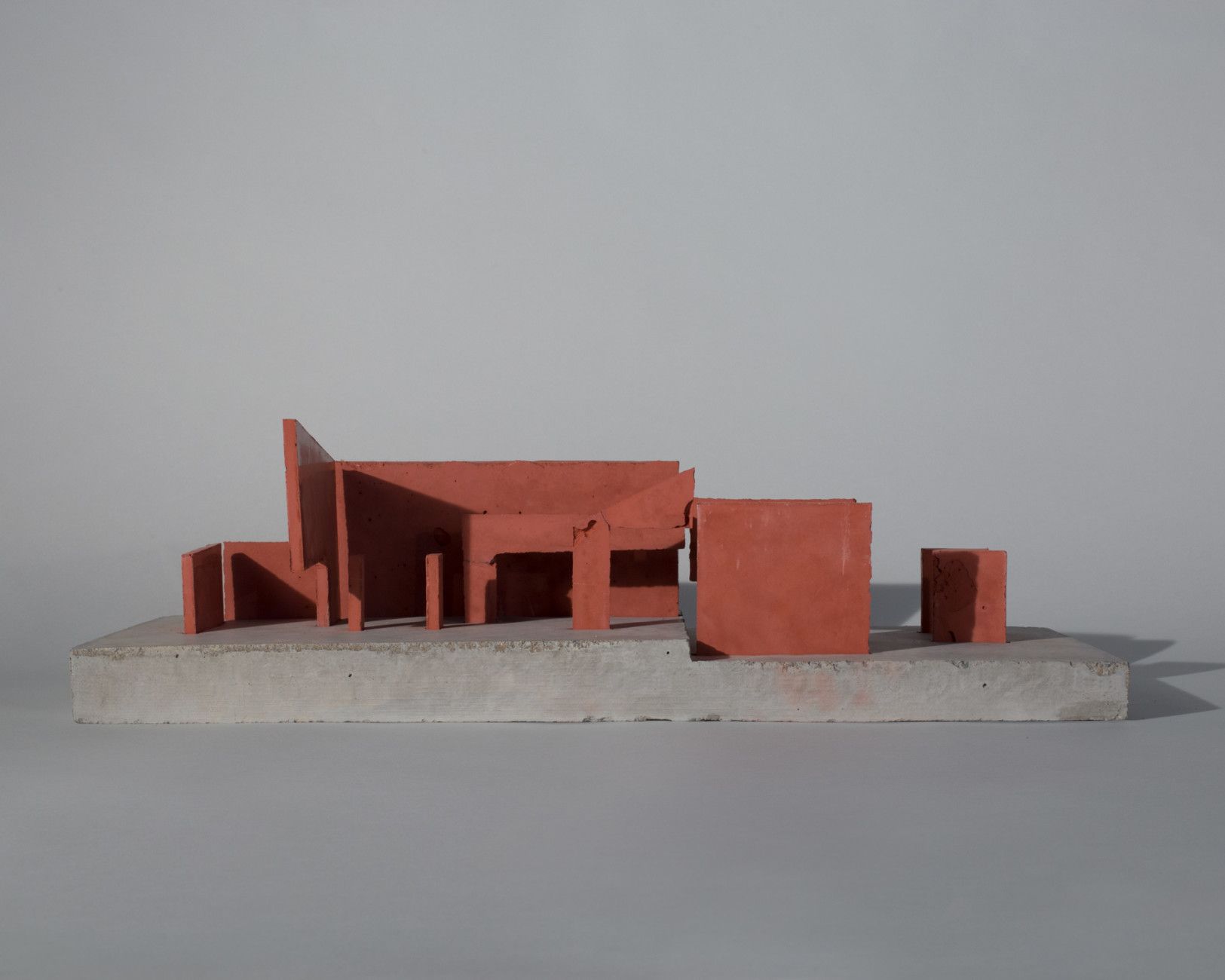
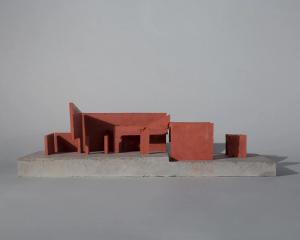
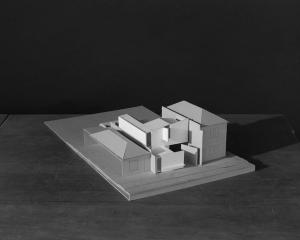
Cast red concrete model illustrating composition of blade walls.
Plan
7.
Library
8.Explaining Humans
Dr Camilla Pang
Link

The Curious Incident of the Dog in the Night-Time
Mark Haddon
Christopher John Francis Boone knows all the countries of the world and their capitals and every prime number up to 7,057. He relates well to animals but has no understanding of human emotions. He cannot stand to be touched. And he detests the color yellow.
Material Memories
Marius Kwint
This book examines the way that objects ‘speak’ to us through the memories that we associate with them. Instead of viewing the meaning of particular designs as fixed and given, by looking at the process of evocation it finds an open and continuing dialogue between things, their makers and their consumers.
Model
9.arrowleft
arrowright
(1 of 3)
Image
10.
Library
11.Thinking Architecture
Peter Zumthor
Architecture that is meant to have a sensuous connection to life calls for thinking that goes far beyond form and construction. In his texts, Peter Zumthor articulates what motivates him to design his buildings, which appeal to the visitor’s heart and mind in so many different ways and possess a compelling and unmistakable presence and aura.
The Autistic Brain
Temple Grandin, Richard Panek
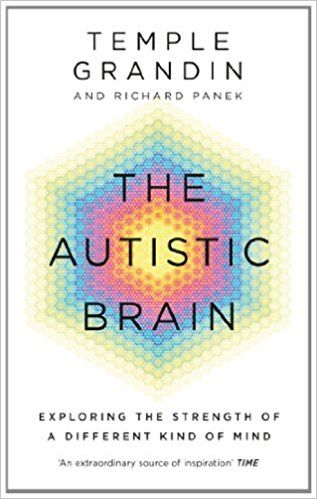
In this fascinating and highly readable book, Temple Grandin offers her own experience as an autistic person alongside remarkable new discoveries about the autistic brain, as well as genetic research. She also highlights long-ignored sensory problems as well as the need to treat autism symptom by symptom, rather than with an umbrella diagnosis. Most exciting of all, she argues that raising and educating children on the autistic spectrum needs to be less about focusing on their weaknesses, and more about fostering their unique contributions.
References
12.
Heidi II: McGlashan Everist
David McGlashan and Neil Everist were commissioned by John and Sunday Reed to design a new house and gallery. Built in 1967, the project has become an icon of Australian architecture. The project is unique for its use of L shaped blade walls to control the spatial sequence and delineate space.