In this competition, architects and designers were invited to help shape the aged care accommodation of the future.
A practice for empathic and
experimental architecture
A practice for empathic and experimental architecture
Practice
Our approach is led by research, experimentation, curiosity and care. These elements are inherent in our philosophy, and drive our interrogative and empathetic response. Specialists from a variety of disciplines contribute to our curative understanding of individual and collective behaviour, sensory perception, physiology and phenomenology. We investigate how people affect – and are at the effect of – our designs.
Empathic
The built environment can have a therapeutic effect on people’s lives. We specialise in creating modes of living, working and being that respond to the world in this way. Communicative client-relationships are intrinsic to our research and emotional abstraction. We seek to move beyond contemplation into meaningful conversation in order to provoke profound transformation, trust and discovery.
Experimental
We begin with inquiry, and engage through experimentation. The impacts of spatial concepts, material properties and planning strategies form hypotheses that are tested and retested. Rigorous investigations seek to provide a unique outcome for each client – and propose new ways of looking at architecture.
Architecture
The built resolution represents the point where theory finds spatial expression, research finds understanding, and experimentation becomes manifest. Our architectural language is an expression of how place, atmosphere, personality and relationship intersect through material, form and sensory experience. Our projects remain live, infinitely feeding the ongoing activity and collective knowledge of the practice.
Selected Publications
Architect Victoria. Parallel Practices. Spring 2017
Mezzanine Magazine, Autumn, 2016
Wood Planet. CEO Publishing. Issue 30, 2014
Specifier Magazine, Issue 119, 2013
Dwell Magazine, Volume 13, 2013
Monument Magazine, Feb/Mar Vol 113, 2013
Monument Magazine, Dec/Jan Vol 106, 2012
Houses Magazine, Issue 75, 2011
AR magazine, Aug/Sept Issue 116, 2010
Contact
T +61 409 255 144
E info@bloxas.com
Instagram @bloxas
Press
2026
Architecture, Au
Interview
11.08.26
Parlour: gender, equity, architecture.
Invited discussion
26.04.26
Disordinary Architecture: Disability meets Architecture
Audio
16.03.26
2025
MSD: Designing Learning Spaces for Neurodiversity and Disability
Invited discussion
11.11.25
The Kenneth Frampton endowed symposium: Housing and Domesticity
Symposium
21.04.25
2024
The Saturday Paper
Article
06.07.24
ArchitectureAu Award for Social Impact
Article
04.07.24
2023
ArchiTeam Conference
Invited discussion
12.05.23
2022
Dairy Road. Canberra
Invited discussion
20.11.22
The Saturday Paper
Article
22.10.22
Show (22 more)
Library
All Good Things
Erin Paterson
Human Forever
Tuen Toebes and Jonathan de Jong
Patient 1, Forgetting and Finding Myself
Charlotte Raven
Inside the OBriens
Lisa Genova
Huntingtons Disease Heroes
Erin Paterson
Dibs: In Search of Self
Virginia Axline
Can You Help Me?
Thomas Bird
The Examined Life
Stephen Grosz
A Life of Ones Own
Marion Milner
The Mind of a Mnemonist
A.R. Luria
Show (55 more)
Teachings
2025
Columbia University, GSAPP (NYC)
Masters
13.01.25
2023
Monash University (MADA)
Masters
01.07.23
2022
Monash University (MADA)
Masters
10.01.22
2020
Melbourne School of Design (MSD)
Thesis
03.08.20
Monash University (MADA)
Masters
12.03.20
2019
Monash University (MADA)
Masters
06.03.19
2018
Monash University (MADA)
Masters
25.07.18
Monash University (MADA)
Masters
28.02.18
2017
Melbourne School of Design (MSD)
Thesis
17.07.17
2016
RMIT University
Masters
01.03.16
Show (1 more)
References
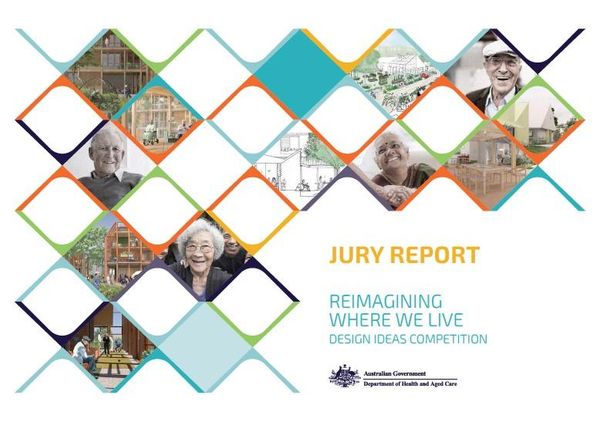
Reimagining Where We Live Design Ideas Competition
Link
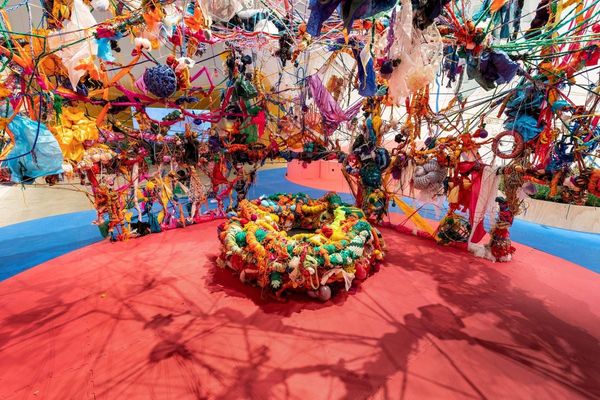
The Childrens Sensorium
The Children’s Sensorium is an ongoing, multi-platform, arts-based research project that explores how art and sensory-play activities and approaches can enhance wellbeing for young children (ages 4-11) experiencing distress, loss and grief.
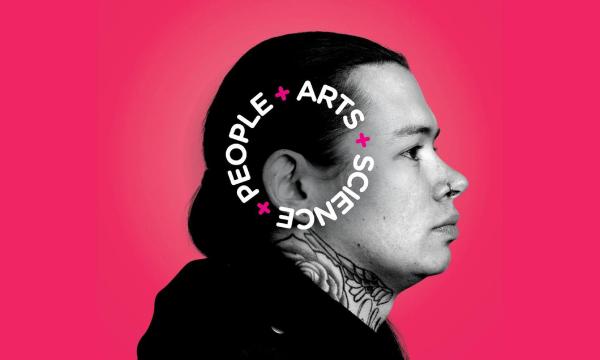
The Big Anxiety
The Big Anxiety brings together creative thinkers – including artists, researchers, scientists, health and community workers, and people with a wide range of lived experiences — to re-imagine mental health care for the 21st century.

Touretteshero
Touretteshero is a place to celebrate the humour & creativity of Tourettes. It’s not about mocking or commiserating – it’s about reclaiming the most frequently misunderstood syndrome on the planet.
Losing Myself: Yeoryia Manolopoulou and Niall McLaughlin
https://vimeo.com/169133065
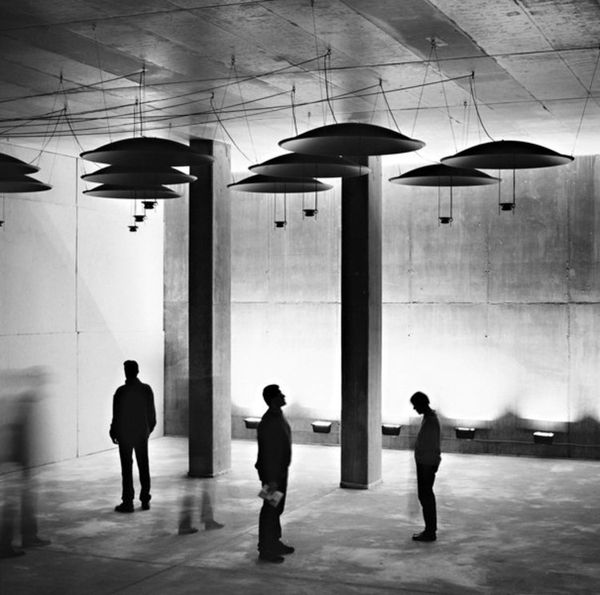
Sound Spaces: Bernhard Leitner
Bernhard Leitner’s works deal with the audio-physical experience of spaces and objects which are determined in form and content by movements of sound. The focus is the relationship between built structures of sound and the human body. The scale ranges from small objects directly applied to the body to large-scale architectural spaces.
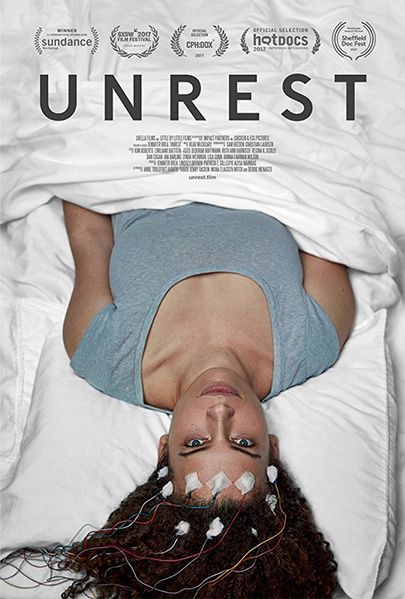
Unrest (film): Jennifer Brea
Unrest is a first-person story of resilience in the face of life-altering loss, exploring how we treat people with illnesses we do not yet understand — how confronting the fragility of life teaches us its value and, ultimately, how we all have the need to find community and connection.
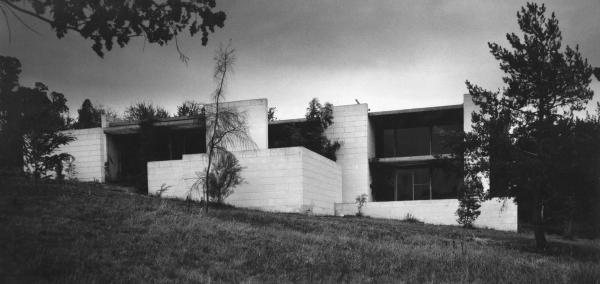
Heidi II: McGlashan Everist
David McGlashan and Neil Everist were commissioned by John and Sunday Reed to design a new house and gallery. Built in 1967, the project has become an icon of Australian architecture. The project is unique for its use of L shaped blade walls to control the spatial sequence and delineate space.
Imagination and Empathy: Juhani Pallasmaa
Perception and the Senses
Perception is a tangled web of processes and so much of what we see, hear and touch is determined by our own expectations that it raises the question of whether we ever truly perceive what others do.What governs our perception of the world? And are we correct to distinguish between sight, sound, smell, touch and taste when they appear to influence each other so very much?ch?
Show (9 more)